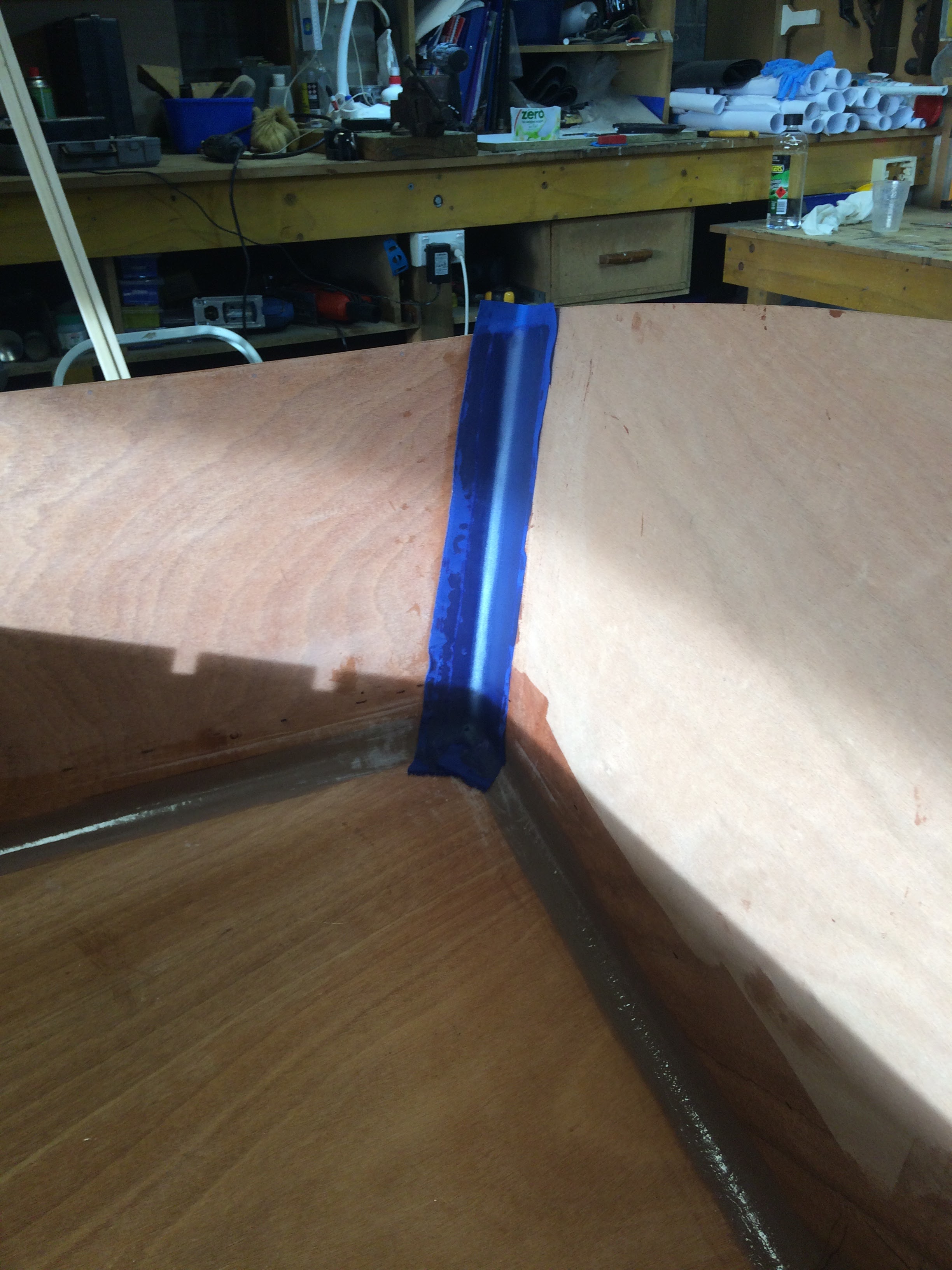
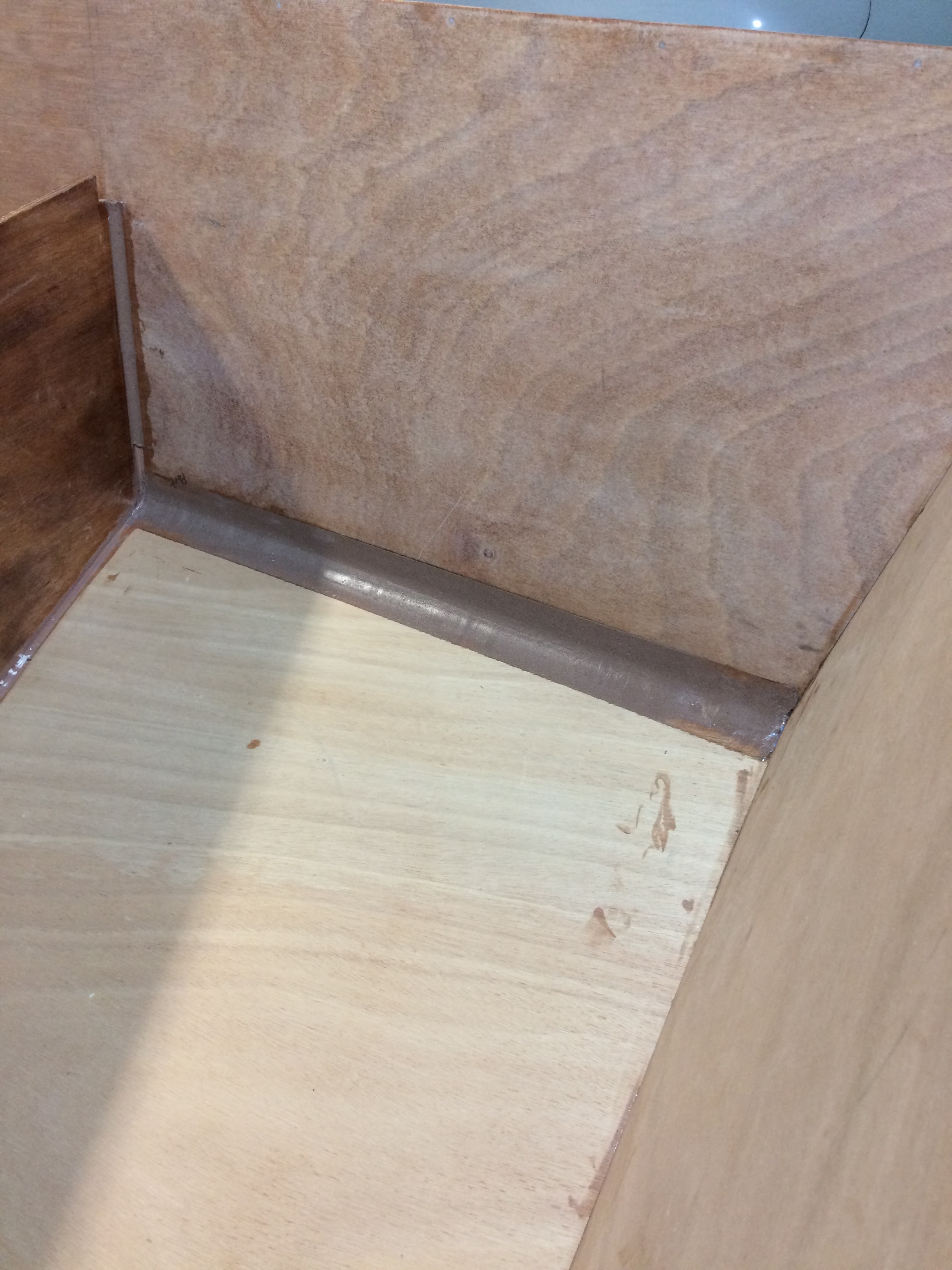
Finally, the last of the lower fillets are laid and sanded.
Masking up.........
That's the end of the seventh month of construction............
Finally, the last of the lower fillets are laid and sanded.
Masking up.........
More Filleting
Well after a four-week break I'm back to the build and that means more fillets. It can't be underestimated the time you spend making fillets, did I mention fillets.
So armed with the following arsenal of filleting weapons it was time to attack the frames and bulkheads. I'll leave the bottom to hull side fillets to last, I should have them down pat by then.
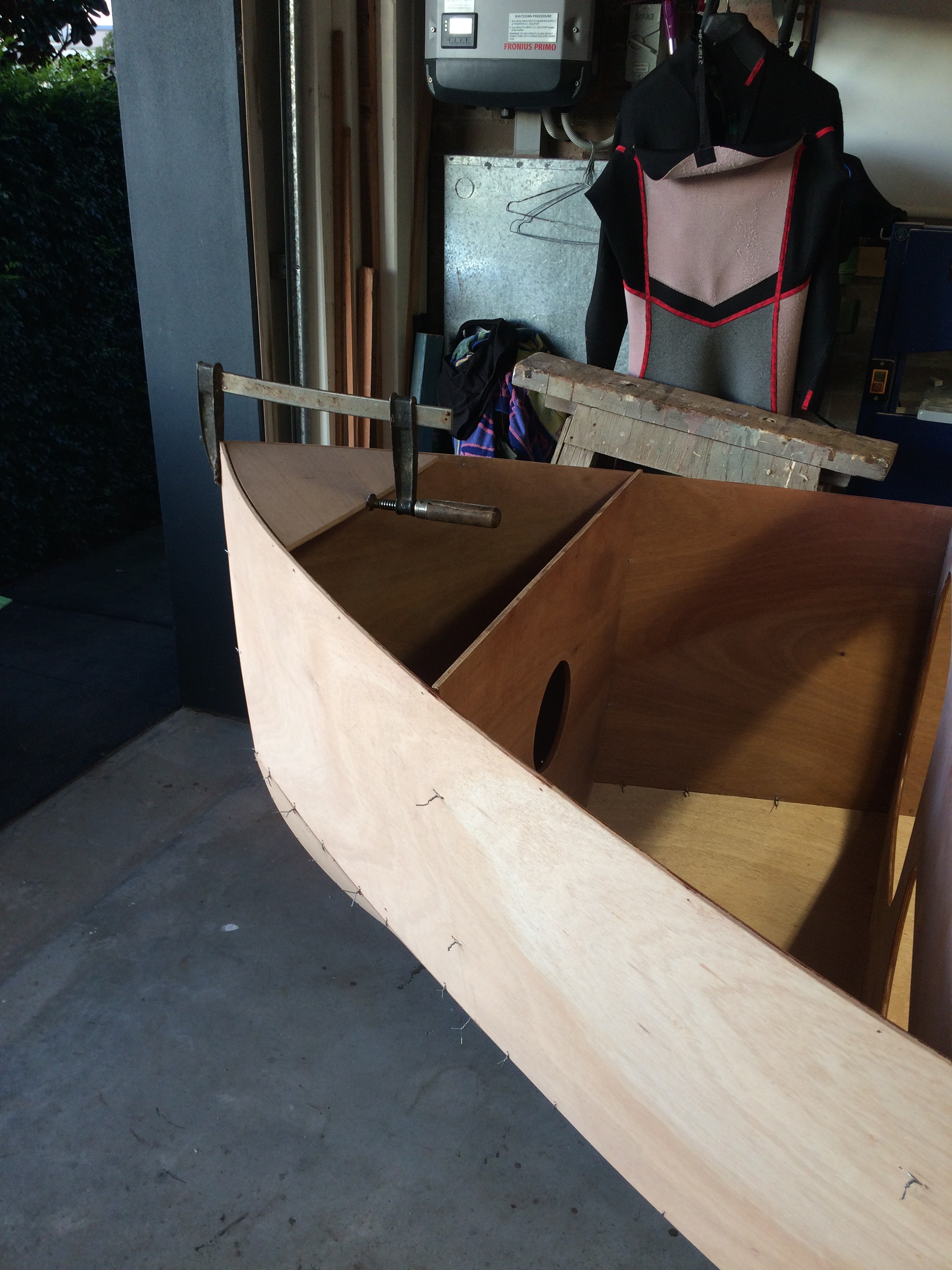
After many hours and many beers, the frame and bulkhead fillets are done.
Now it's time to do the larger bottom to hull side fillets. I'll take extra care making these fillets as they are exposed and seen from inside the cabin.
The sections are thoroughly sanded, cleaned and masked up.
The joint is thoroughly wetted out prior to laying the fillets and peel apply rolled over the fillets.Thats the end of the Sixth month of construction...........
Two further overlapping glass tapes were added over the fillets between the transom and hull sides. Blue peel ply was smoothed over the wet glass tapes. As this was my first-time using peel ply, I chose a location that is hidden inside the lockers.
For the first fillets I decided to start in the aft area between bulkhead eight and the transom.
This is how I make fillets:
The wetting out of the joint prior to making a fillet produces a strong bond and prevents a dry joint.
I glued the transom in rather than epoxy welding to ensure a strong bond.
After a bit of a cleanup it’s time to start filleting.
In preparation for the next stages of the build I ordered the hull and sailing hardware package from Denman Marine the Aussie distributor located in Tasmania.
Here is their website:
https://denmanmarine.com.au
At last a window of fine weather allowed me to pick up the plywood from Sydney. The last 11 sheets of Okoume are loaded onto the roof racks and a few other goodies in the boot. When back at the workshop I stored the plywood vertically on a raised floor and secured tight against the storage frame.
More work on the Keel.
I thought It would be easier to add some extra layers of cloth to the very bottom of the keel before installing the bottom and sides. This would provide extra protection when beaching and loading onto the trailer. I removed the keel assembly from the building cradle and placed upside down on two sawhorses.
I taped up the centerboard opening to prevent epoxy flowing into the centerboard case.
When cured I trimmed the excess cloth, sanded and cleaned the area and proceeded to place the assembly back into the cradle when............bang crash.......the keel assembly toppled off the wheeled trolley and the forward end of the keelson broke off, fortunately this was the only damage.
I recall reading a comment from another Pocketship builder who accidently broke off the forward section of their keelson and I admired their positive comment and attitude regarding the challenge to repair it.
So now I've given myself that extra challenge to replace it.
"Oh the Joys of boatbuilding"