Contact Email

My contact email: 1tgoding@gmail.com

Thursday, October 12, 2023

Cockpit Seat Backs

 To ensure a neat fit I decided to use cardboard templates on the forward and aft end of the cockpit seat backs.

When overlaying the cardboard templates onto the paper plans a slight difference can be seen.


The cardboard templates are located in position tight against the transom and the aft cabin BH. I hot glued the templates with thin plywood strips this provided the exact length required and eliminated any gaps that some builders have experienced in the past.


The additional time taken results in a neat fitting cockpit seat side. A very good result.

The next step was to cut out the seat back rings used as stiffeners behind the seat back storage area.


A small curve is routed on the inside edge of each ring.


The rings are used as templates to cut out the storage access holes....
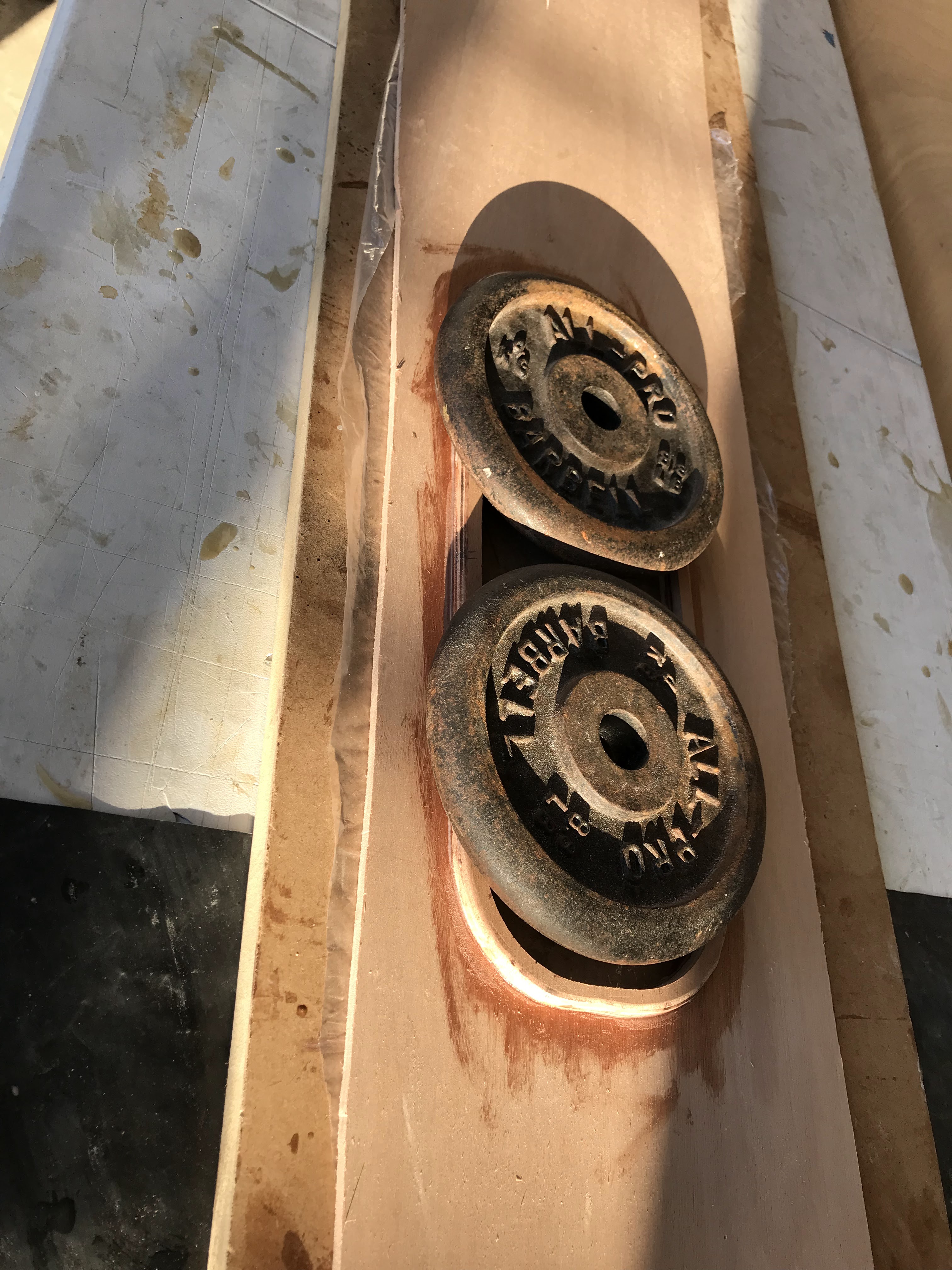


.....glued and held in place with weights.
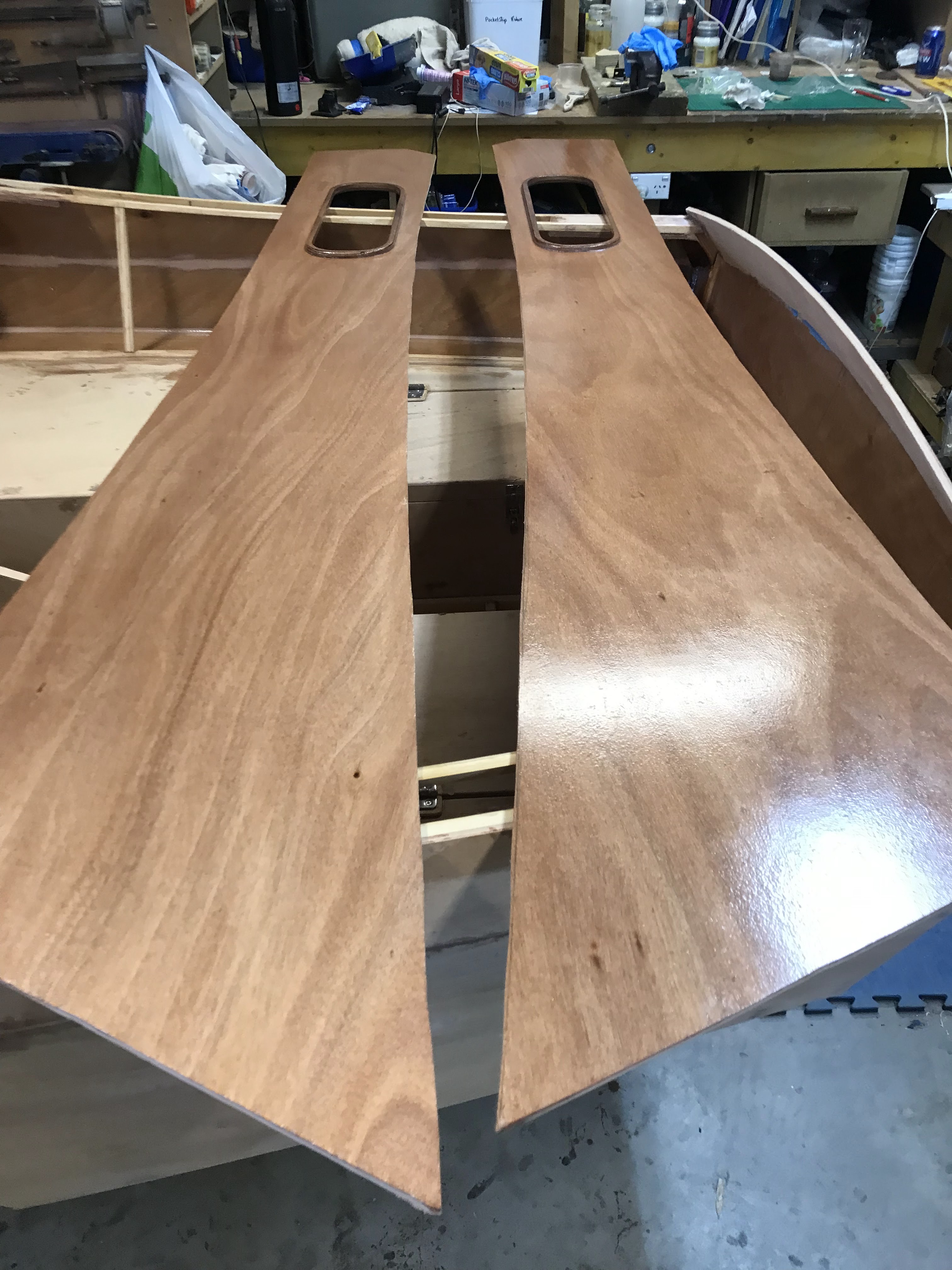


To seal the inside face three coats of epoxy are applied wet on wet. 

BUT before I glue it in place, I have a couple of mods.

The first mod is a storage area in the first buoyancy chamber aft of the cabin BH with access from inside the cabin area. The second mod is to add electrical conduit through the foam buoyancy chambers from the cabin BH to the aft seat back storage area. This will provide future electrical access for things like the transducer lead and power to a chart plotter, USB/Cig socket DC power outlets, light power and BH compass backlight power. This will eliminate visual wiring inside the cabin area.

I would welcome any comments, suggestions or thoughts re these mods, send me an email listed at the top of the page or via the "Contacts Form" above on the right.

Mod One "The Storage Area"

To provide access to the storage area I drilled three holes using a large hole saw and a Forstner bit.


The section is removed with a renovator tool.


A layer of cloth is epoxied onto the storage floor area.


Here is a view from the cabin area. I have some ideas on additional storage mods to the cabin BH, watch this space.


Mod Two "Electrical Access"


Using a Forstner bit I drilled 25mm holes into the seat back frames and the lazarette area. 


A length of 25mm electrical conduit is inserted through the seat back frames between the two storage areas. A smaller length of conduit is inserted through the cockpit floor and the lazarette area but raised above the deck to prevent water entering the lazarette area.


The conduit is sealed in place with silicon.


The smaller conduit is glassed into place.


Now the mods are complete there is still a significant amount of work required until I glue on the seat backs. 


A layer of cloth is epoxied onto the floor of both for and aft storage areas.


The whole area is given three coats of epoxy wet on wet to ensure it is well sealed and watertight.


Now it's time to make lots of mess. No matter how much you try you can't cut up polystyrene foam without small beads going everywhere.
I had collected foam packing and foam boxes for months, now it's time to cut it up and fill the buoyancy chambers. Don't underestimate this job, its very time consuming. If I had my time over again I would use expanding foam, much easier, much quicker and NO MESS.

Anyway, I feel better now I've had my rant. here are pics of the installed foam.


Wednesday, October 11, 2023

Back after a Break

 After a bit of a break, I'm back into boatbuilding mode. It's amazing how it takes a while to get back into the groove.

I have done a tally of my timber stock and can confirm I have all I need to finish the boat and spars however, I still need to purchase the exterior paint, electricals and finish the trailer build. 

I found approximately 10 lt of the "Botecoat" epoxy had crystalized over winter but simple warming up the container converted it back to its original consistency (thank goodness) so nothing lost.

Cheers

Terry


Friday, July 14, 2023

Cockpit Topside work continues

 Now it's time to mill up the stringers and sheer clamps for the cockpit seat backs. I used 40mm x 19 mm knot free spruce from the local hardware.


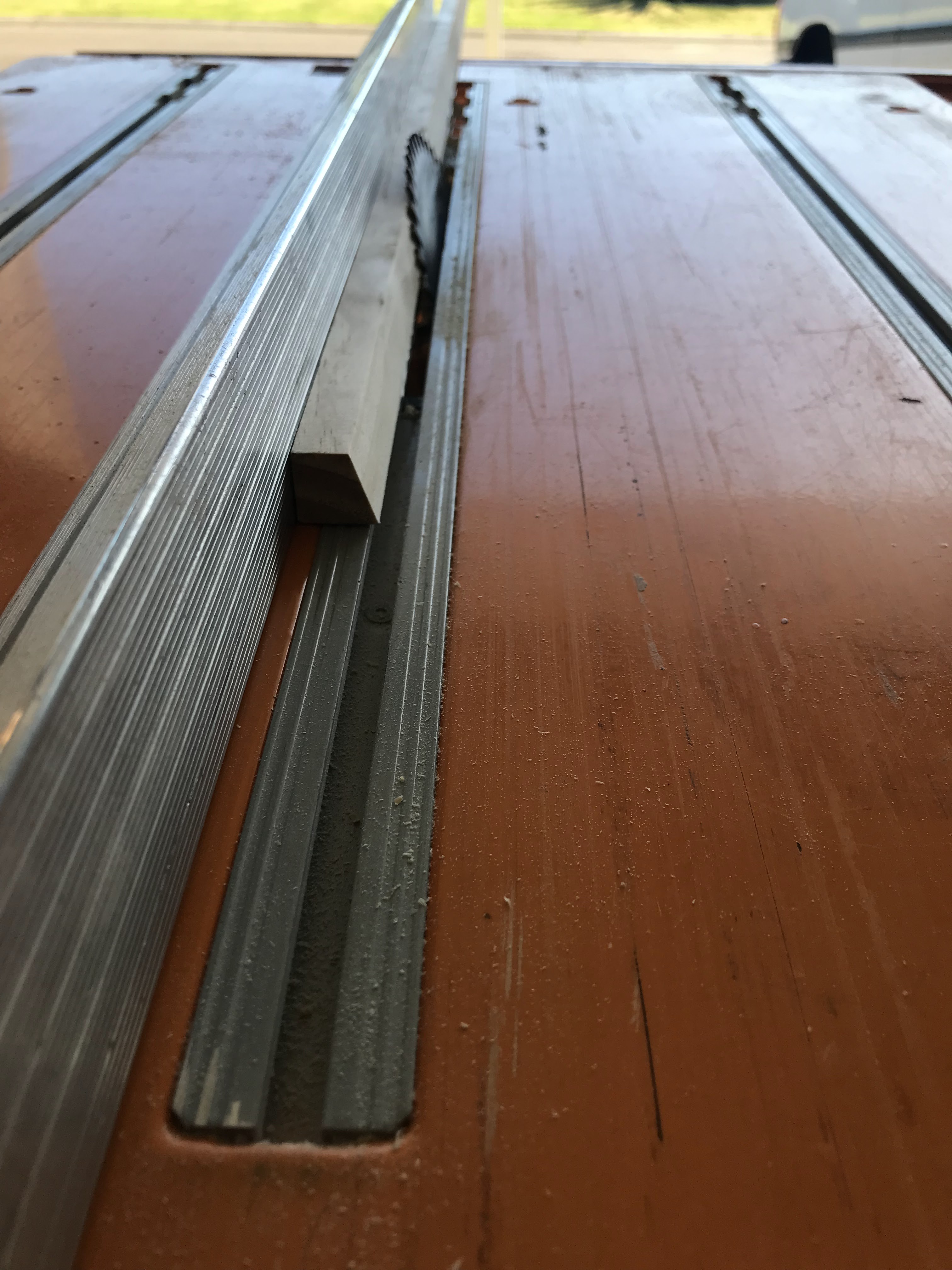
I set my table saw blade to 72 degrees. 


...and ran two 2.4m long x 40mm wide spruce through. 


This produced the four angled stringers required for the seat backs. The saw was set back to 90 degrees for the two sheer clamps on the upper outer edge.


The stringers and sheer clamps were run through a thicknesser to 13mm.


All the stringers are ready to be glued in place.


The port & starboard 72-degree lower stringers are glued in place, small screws and weights maintain a nice curve. 


Two temporary frames are cut from scrap and propped near the transom.


The upper stringer and sheer clamp is glued in place on the starboard side and held with weights and clamps. Small adjustments are made to the recesses in the seat back frames to fit the stringers and sheer clamp.


The port side sheer clamp is clamped in place.


When the epoxy dried, I used a combination of belt sander, block plane and orbital sander to reduce the height of the stringers to the same level as the hull side decks. A long spirit level was layed athwartships to ensure the seat back stringers were level. A nice pleasing to the eye curve is maintained for the seat back tops.

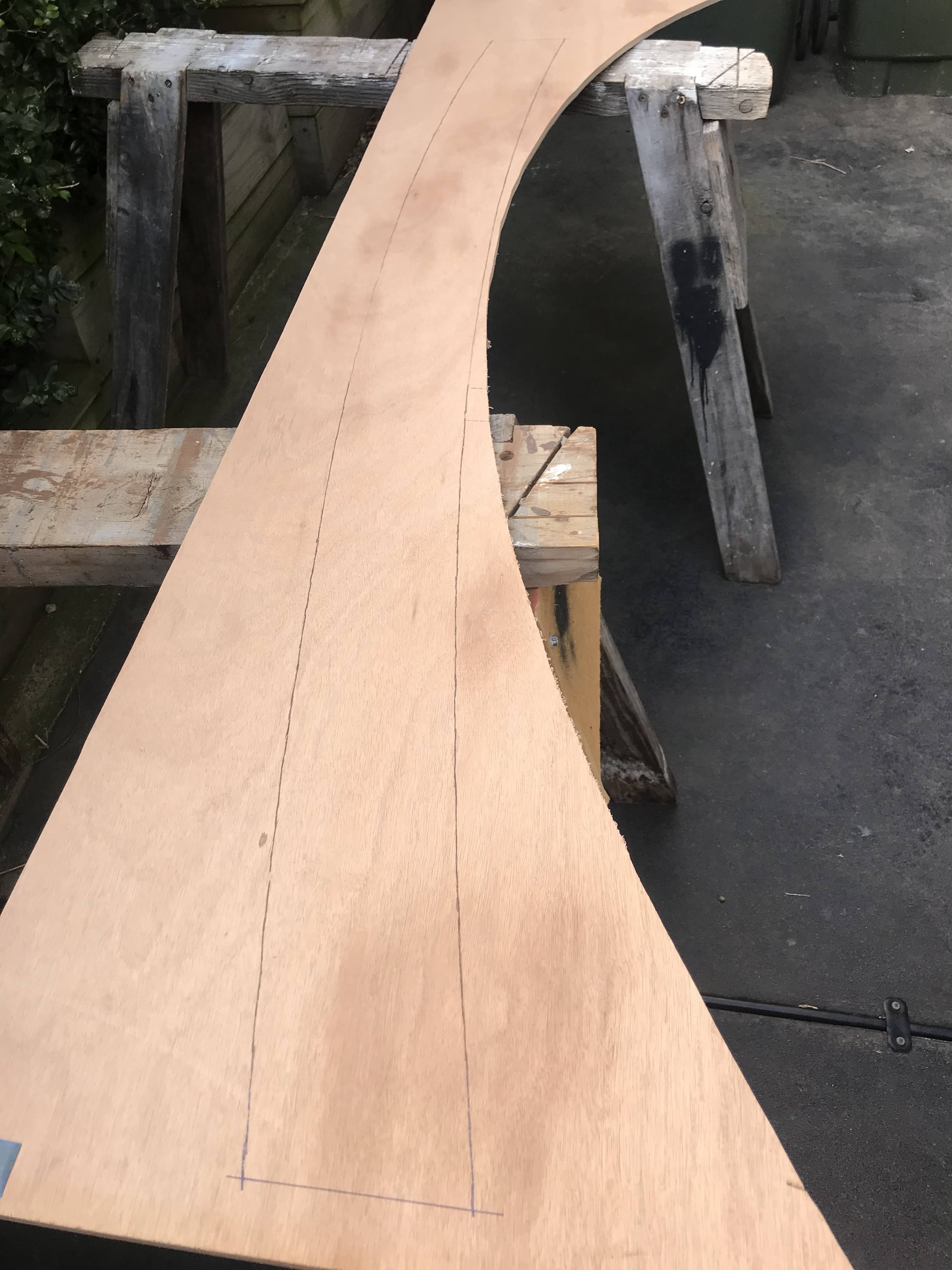
I made a cardboard template for the transom skirt for three reasons. firstly, A cardboard template is easy to bend in place than 9mm plywood, Secondly, the placement of the cardboard template with cut outs for the seat back stringers enabled a precise line to be scribed on the stringers so when cut they fitted neatly against the transom skirt and thirdly, it enabled me to cut out the two blocks used to secure the transom skirt.


After trimming the seat back stringers and gluing the blocks the cardboard template was used to scribe the 9mm ply for the transom skirt... so n ow it's time to bring out the trusty jig saw and make some dust.


Temporary angled blocks are screwed to the transom. Starting in the middle the skirt is screwed in place and pushed and screwed to follow the top of the transom.


It just amazes me how all these straight pieces of timber when fixed in place form such beautiful curves and traditional lines, My PocketShip is evolving into a pretty girl.


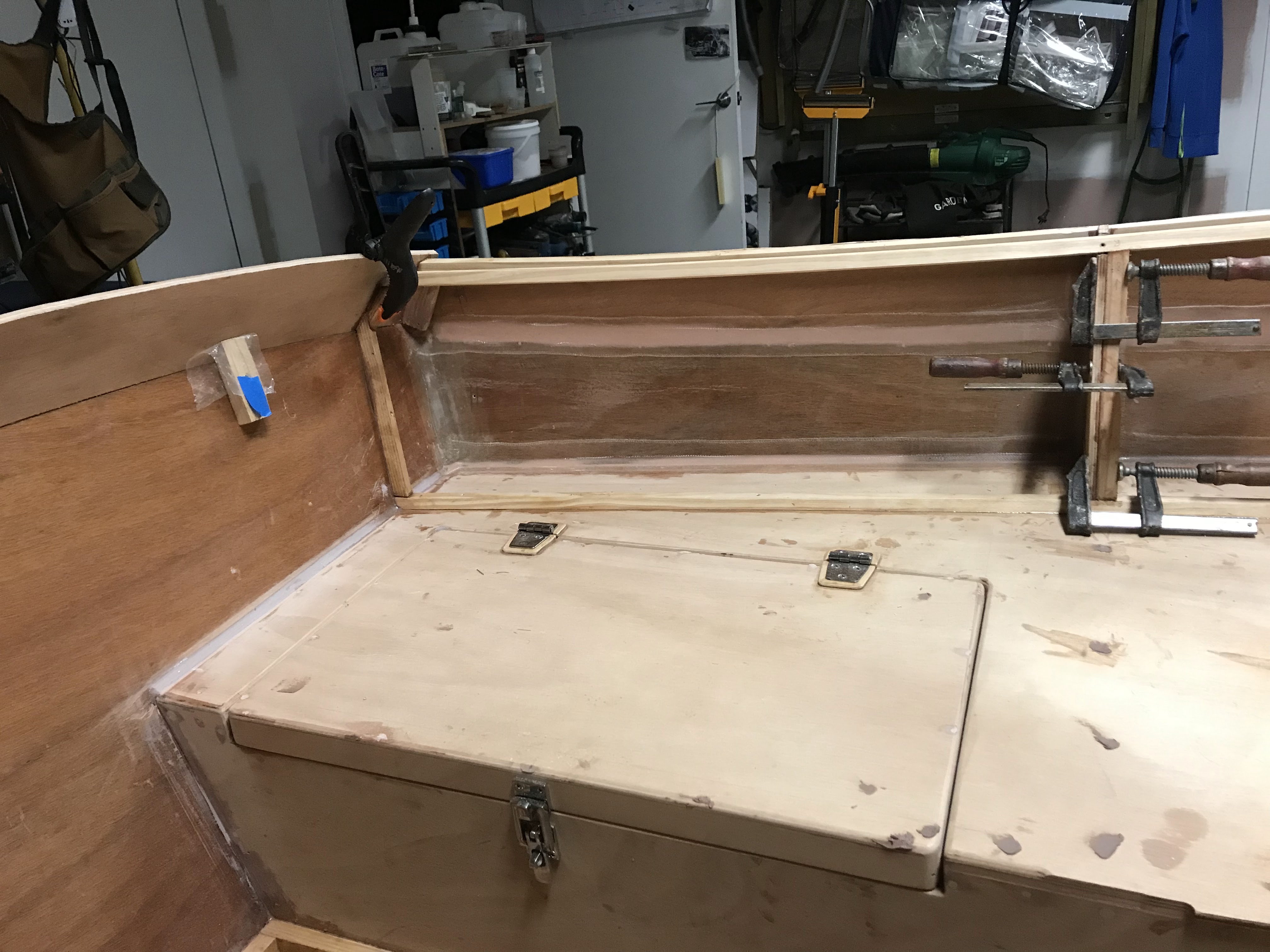
In addition to the cabin BH and Transom I glued extra cleats to each seat back frame to provide additional area for securing the 6mm plywood seat backs.


I also added an extra vertical cleat between the upper and lower stringers, in the middle of frames 2 & 3. Again, to provide support for securing the seat backs.


Time to install blocking timbers in the seat back tops for the spinnaker hardware, gallows and aft anchor cleats. I also added additional blocking Timbers at the forward end next to the cabin BH just in case I think of anything else to install. I constructed these from three pieces of scrap ply (2 x 9mm and 1 x 6mm) laminated together.


The lower piece straddled the stringers as a base for the two upper pieces which fit between the stringers. A small rabbet on the edge of the lower piece enables the upper pieces to fit level with the top of the stringers.


The three sections are glued together and held in place with clamps.


Here are the spinnaker hardware blocking timbers located either side of the seat back frames.


Sunday, July 2, 2023

Timber Steaming Test


 I decided to trial a timber steaming system. I initially intended to build something from 90mm diam. PVC plumbing pipe but after a scrounge around under the house I found a plastic tube from a petrol garden blower. The tube's diameter was large enough and the length long enough for both the sheer clamps and the forward section of the gunwales. 


The tube had an angled section on the end that would sit above a boiling jug or saucepan.


 STEAMING TIMBER

Trial One


The first set up involved laying the pipe on a trolly with a boiling kettle supplying steam.


As can be seen here by the escaping steam it worked OK but a lot of heat was lost out of the plastic tube, and I wasn't happy with taping down the "on" switch of the kettle to maintain boiling.

Here is a video of my first home made timber steamer.

Trial Two


The plastic tube was 
tightly wrapped with towels to keep in the heat.


The unit was placed on sawhorses and angled so the end was lower to allow water to run into a bucket.


A pot of boiling water was placed under the tube and towels used to direct the steam into the pipe.


The starboard sheer clamp was placed inside the pipe. You can see the steam coming from the end of the pipe.


I steamed the starboard sheer clamp for twenty minutes before clamping in place. While the timber did bend OK it still required some force from the clamps, there was no breaks or cracks.
I left it in situ under clamps overnight, when removed the timber maintained a nice bend.


Wednesday, June 28, 2023

Topside Work continues.

 After the upper hull sides and seat-back frames are epoxy tacked in place it was time to lay some fillets. Larger diameter fillets were layed between the hull sides and the topside panels, smaller fillets layed around the seatback frames.


I took my time with the fillets to reduce sanding. 


Leftover filleting epoxy was used to fill screw holes in the cockpit floor.


After sanding, the fillets and seat back frames are strengthened with fiberglass tape.


Thats the end of sixteen months of construction